

The “New Year, New Me” Problem
The motivation is fantastic! As the calendar turns and the holidays wind down, many of us in St Albans hit the gym, lace up our running shoes, or sign up for a new class. We commit to that exciting “New Year, New You” fitness routine.
But here’s the harsh reality: Studies show that over 50% of people beginning a new exercise routine experience an injury within the first six weeks. Why? Because they’re building fitness on a flawed foundation.
You wouldn’t build a house on cracked concrete, and you shouldn’t build a strong body on existing imbalances. Before you put your body under the high stress of a new routine, the essential first step is a Full Movement Assessment (FMA).
What Are You Missing? The Problem with Self-Assessment
What Are You Missing? The Problem with Self-Assessment

Old Injuries: That nagging ankle sprain from years ago may have forced your knee and hip to compensate, which means running will immediately put undue stress on that faulty joint sequence.
The Desk Effect: Hours spent hunched over a desk create predictable patterns: weak glutes, tight hip flexors, and rounded shoulders. A generic workout will only strengthen these bad habits and increase your risk of chronic pain.

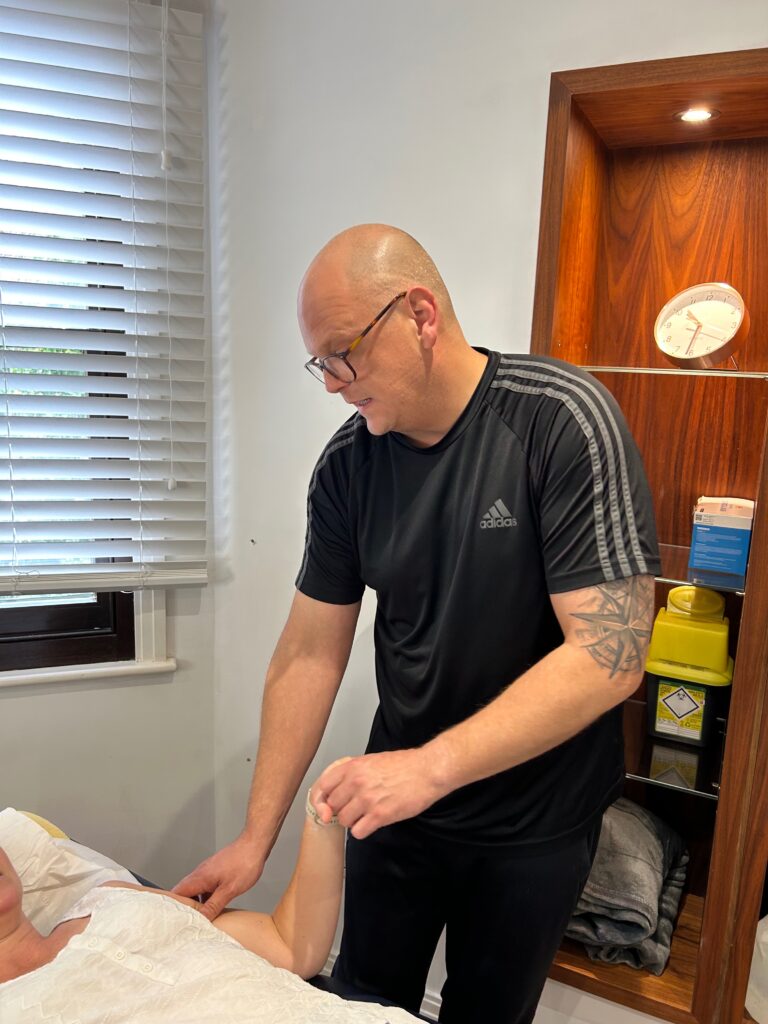
Compensations: Your body is incredibly clever at compensating for weakness. An FMA helps us find those hidden “weak links” that are masking the root cause of your pain or poor performance.
The Three Pillars: What the Full Movement Assessment Reveals
Pillar 1: Identifying the Root Cause of Pain (The “Why”)
We don’t just treat the pain; we find out why the pain exists. If your knee hurts when you run, the issue is rarely the knee itself. It’s often due to poor control or weakness in your foot, hip, or core.
The FMA uses targeted tests to expose these underlying causes, ensuring we don’t waste time on treating symptoms.
Pillar 2: Revealing Imbalances and Weak Links (The “How”)
We evaluate your flexibility, stability, and strength across all major joints. We look for muscle imbalances—where one muscle is too tight and its opposing muscle is too weak.
Finding this “weakest link” allows us to prioritize exercises that correct the fundamental problem, rather than overloading an already faulty movement pattern.
Pillar 3: Creating a Hyper-Specific Plan (The “What Next”)
The FMA is the basis for a personalized, injury-prevention and performance plan. It tells your Resolution Clinic therapist exactly:
- Which muscles need strengthening.
- Which muscles need lengthening.
- Which exercises you should prioritize (and which ones you must avoid).
This hyper-specific plan prevents you from wasting months on generic workouts that are not only ineffective but potentially harmful to your unique biomechanics.

Start Your Fitness Journey the Smart Way
Stop guessing, and start resolving! Getting injured means months away from your goals and costly recovery. By investing in an FMA, you invest in long-term, sustainable health.
🎉 Limited-Time Offer: Start Your Fitness Journey the Smart Way
Stop guessing, and start resolving! Getting injured means months away from your goals and costly recovery. By investing in an FMA, you invest in long-term, sustainable health.
For a limited time, we are making this essential first step even easier. We are offering our comprehensive FULL Movement Assessment.
Leave a Reply